07 — Insights

Short notes from KENICHI KURIHARA

Not a blog, not a newsletter. Just three things I get asked about every week, written down so I can point people here instead of explaining the same idea out loud for the hundredth time.

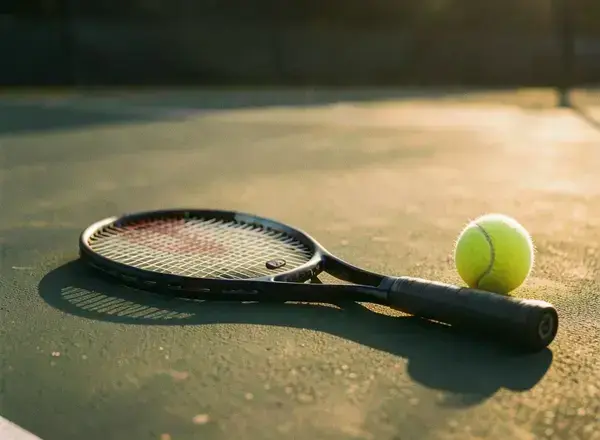
Tennis racket and ball on a USA court at golden hour
Biomechanics · 5 min

The serve is a rhythm problem before it's a power problem

Most club players I've worked with think they need a faster serve. After a few weeks, they almost always discover the missing piece was a repeatable rhythm. Here's the order I teach it in.

Read more

The honest opening: A faster serve rarely helps a 3.0 to 4.0 player. The serve that lands at 70 mph with depth and placement will beat the 85 mph serve sailing long nine times out of ten. Power comes later, after rhythm is locked in.

The three beats I teach in order:

1. Stance and ball toss. Same place every time, no exceptions. The toss goes to where your racket can hit it without you reaching. If the ball is past the tip of your racket at contact, your toss is wrong.

2. The load and rise. The bend into the knees, the rotation of the shoulders, the rise onto the toes. This is the part most players skip because it feels slow. It isn't. It's the engine.

3. The contact and the finish. Hitting the ball at full extension with your weight moving forward, racket finishing over your opposite shoulder. If you can't see your finish in your mind's eye, you can't repeat it.

The homework drill: 20 serves a day for 14 days, no more. Half at 60% effort, focused purely on consistent toss. Half at full effort, focused purely on finishing over the opposite shoulder. The boring reps build the habit.

mind
Mental Game · 4 min

A pre-serve routine that holds up under pressure

If your third sets keep slipping, the problem is almost always between points, not during them. Here's a 5-step routine I teach every player I work with.

Read more

The trap: Most players reach for a new strategy or a new grip when the score is tight. The brain is looking for control, and the hand is what it knows. The result is a change in mechanics right when you need consistency.

The 5-step pre-serve routine:

1. Bounce the ball the same number of times. Pick a number — three, four, whatever — and stick with it. The point isn't the number. The point is the repeatability.

2. Look at the score. Out loud if you have to. "Thirty-fifteen." It sounds silly. It works because it forces the brain out of panic and into present tense.

3. Pick a target. Not a "where to hit" target — a "where to aim" target. The service box is the same size whether you're serving for the match or 0–0 in the first set.

4. One breath. In through the nose for two counts. Out through the mouth for four. The exhale is the trigger. It's the part your body learns to wait for.

5. Go. No second thoughts. The moment after the exhale is the only moment in tennis that is fully under your control. Use it.

The drill: Practice this routine for 50 serves in a row, no points, no opponent. Boring on purpose. The goal is to make it muscle memory before you ever need it at 5–5 in the third.

gear
Equipment · 3 min

The racquet, the strings, and the one change worth making

Players obsess about racquets and string setups. Most of it doesn't matter as much as you think. There is one change that almost always helps.

Read more

The honest setup: For a 3.0 to 4.5 player, the difference between a $200 racquet and a $350 racquet is mostly cosmetic. The string, the tension, and the grip size matter more than the brand on the throat.

The one change worth making: Get your racquet restrung more often than you think you need to. Polyester strings lose tension in about 10 to 15 hours of play. Most club players hit with "dead" strings for weeks without realizing it. Drop the tension 2 pounds from what you think feels good, and restring every 6 weeks if you play twice a week.

The grip size question: If your index finger fits cleanly in the gap between your fingertips and the heel of your hand when you hold an Eastern forehand grip, your grip size is right. If it doesn't, the racquet is forcing you to grip harder than you should, which means more arm fatigue, which means more inconsistency late in matches.

What I'd skip: Lead tape experiments, dampeners marketed as performance enhancers, and any racquet you've only hit with for 15 minutes. None of it will move the needle as much as a good pre-serve routine and string that still has life in it.

Want me to look at your current setup? Send me a quick note and a photo of your racquet with a coin next to the grip for scale. I'll write back with a thought, free of charge.
Want more?

More notes from KENICHI KURIHARA in person

These three short notes scratch the surface. The real work — your real notes — happens during our sessions. Send a message and let's start the conversation.